Psychiatrists in India treat far more than severe mental illness. A clear, category-by-category overview of the conditions actually within their scope.
In this article 12
- Mood Disorders
- Anxiety and Related Disorders
- Psychotic Disorders
- Neurodevelopmental Conditions
- Substance Use and De-Addiction
- Sleep Disorders
- Trauma, Stress, and Adjustment Difficulties
- Geriatric and Neuropsychiatric Conditions
- How Diagnoses Are Actually Reached
- What This Looks Like in Practice
- Frequently Asked Questions
- Conclusion: The Scope Is Much Wider Than "Severe" Mental Illness
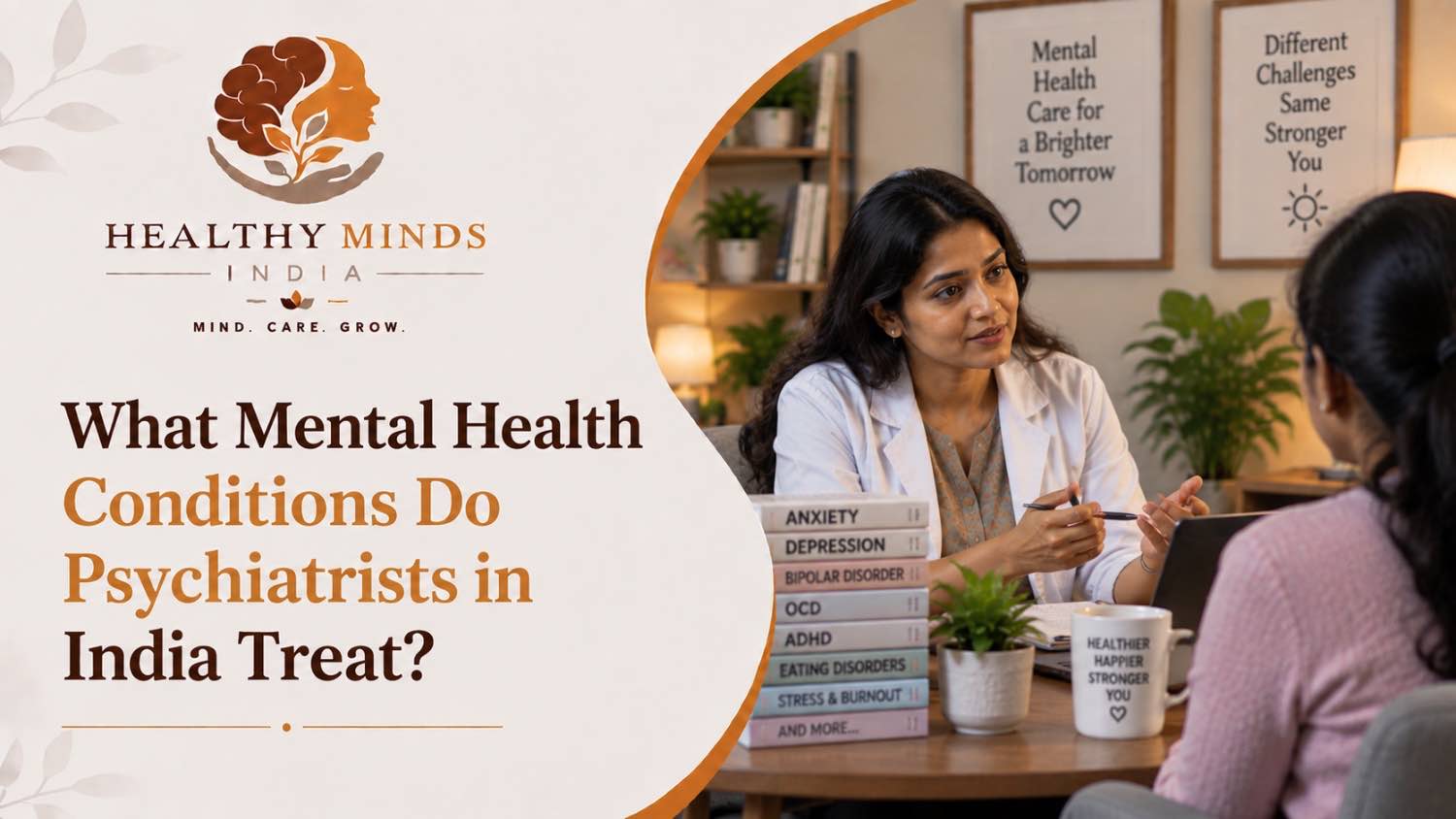
"Psychiatrist" often gets mentally filed under one or two conditions - severe mental illness, or perhaps just depression. In practice, the scope is far wider, covering most conditions that affect mood, thought, behaviour, and cognition across every age group.
Here is a clear overview of what psychiatrists in India actually treat, organised by category rather than a long, undifferentiated list.
Mood Disorders
This includes major depressive disorder, persistent low-grade depression (dysthymia), and bipolar disorder, where mood swings between depressive and manic or hypomanic episodes. These are among the most common reasons people consult a psychiatrist, and typically respond well to a combination of medication and structured therapy.
Anxiety and Related Disorders
Generalised anxiety disorder, panic disorder, social anxiety, specific phobias, and obsessive-compulsive disorder (OCD) all fall within a psychiatrist's scope. These conditions are frequently under-diagnosed because symptoms are often physical - racing heart, breathlessness, stomach issues - and mistaken for a purely physical problem before the underlying anxiety is identified.
Psychotic Disorders
Schizophrenia and other psychotic disorders, involving hallucinations, delusions, or significantly disorganised thinking, require ongoing psychiatric management, usually combining medication with psychosocial support and family involvement.
Neurodevelopmental Conditions
ADHD and autism spectrum conditions are increasingly assessed and managed by psychiatrists, particularly child and adolescent psychiatrists, often working alongside psychologists and developmental specialists for a complete evaluation.
Substance Use and De-Addiction
Psychiatrists treat alcohol and substance dependence, including the medical management of withdrawal, relapse-prevention medication where appropriate, and coordination with counselling and de-addiction programmes.
Sleep Disorders
Persistent insomnia, and mood or anxiety-related sleep disruption, are commonly addressed as part of psychiatric care, since sleep and mental health affect each other in both directions.
Trauma, Stress, and Adjustment Difficulties
Post-traumatic stress disorder and significant difficulty adjusting to major life events - bereavement, job loss, a serious diagnosis - are within a psychiatrist's scope, often managed jointly with therapy.
Geriatric and Neuropsychiatric Conditions
Depression in older adults, and the behavioural and psychological symptoms that often accompany dementia - agitation, sleep disturbance, hallucinations - are treated by psychiatrists, frequently with a geriatric or neuropsychiatric sub-specialisation.
How Diagnoses Are Actually Reached
Psychiatrists in India generally use the criteria in the DSM-5 (the American Psychiatric Association's diagnostic manual) or ICD-11 (the World Health Organization's classification) to structure a diagnosis, rather than relying on a single symptom or a five-minute impression. This is part of why a thorough first evaluation takes time.
What This Looks Like in Practice
At Healthy Minds India, a psychiatry doctor in India evaluates across this full range - mood and anxiety disorders, ADHD, de-addiction, geriatric mental health, and more - using a structured, evidence-based process. If you are trying to work out what your first visit will actually involve, see this walkthrough of what happens during your first psychiatrist visit.
Frequently Asked Questions
-
Do psychiatrists only treat severe mental illness?
No. Most people seen by psychiatrists have common conditions like depression, anxiety, or insomnia, not severe or rare illness.
-
Can a psychiatrist diagnose ADHD in adults?
Yes, adult ADHD is a recognised diagnosis, and many psychiatrists specifically assess and treat it.
-
Do I need a psychiatrist or a psychologist for anxiety?
Either can help; a psychiatrist is needed if medication may be part of the treatment, while a psychologist provides talk therapy. Many cases benefit from both.
-
Is de-addiction treatment part of psychiatry?
Yes, substance use disorders are a recognised area within psychiatry, often requiring medical management of withdrawal alongside counselling.
-
Can psychiatrists treat sleep problems that are not caused by mental illness?
Psychiatrists commonly treat insomnia linked to mood or anxiety; purely physical sleep disorders like sleep apnoea are usually referred to a sleep medicine specialist.
-
What diagnostic criteria do Indian psychiatrists use?
Most use the DSM-5 or ICD-11, standard international classification systems, rather than informal criteria.
Conclusion: The Scope Is Much Wider Than "Severe" Mental Illness
Psychiatrists in India treat a broad range of conditions across every age group, from common anxiety and depression to ADHD, de-addiction, and late-life dementia-related symptoms. If a concern is affecting your mood, thinking, behaviour, or sleep in a way that is not resolving on its own, it is very likely within a psychiatrist's scope to help.
Medically reviewed by Dr. Saurabh Kumar, Consultant Neuropsychiatrist, Healthy Minds India, Patna. This article is for general education and is not a substitute for a personal consultation. To discuss your situation, book an appointment or contact the clinic.
Disclaimer: all characters and events depicted in this blog are entirely fictional. Any resemblance to actual persons, living or dead, is purely coincidental. The content is intended for informational purposes only and should not be considered medical advice. Always consult a qualified healthcare professional for medical concerns.