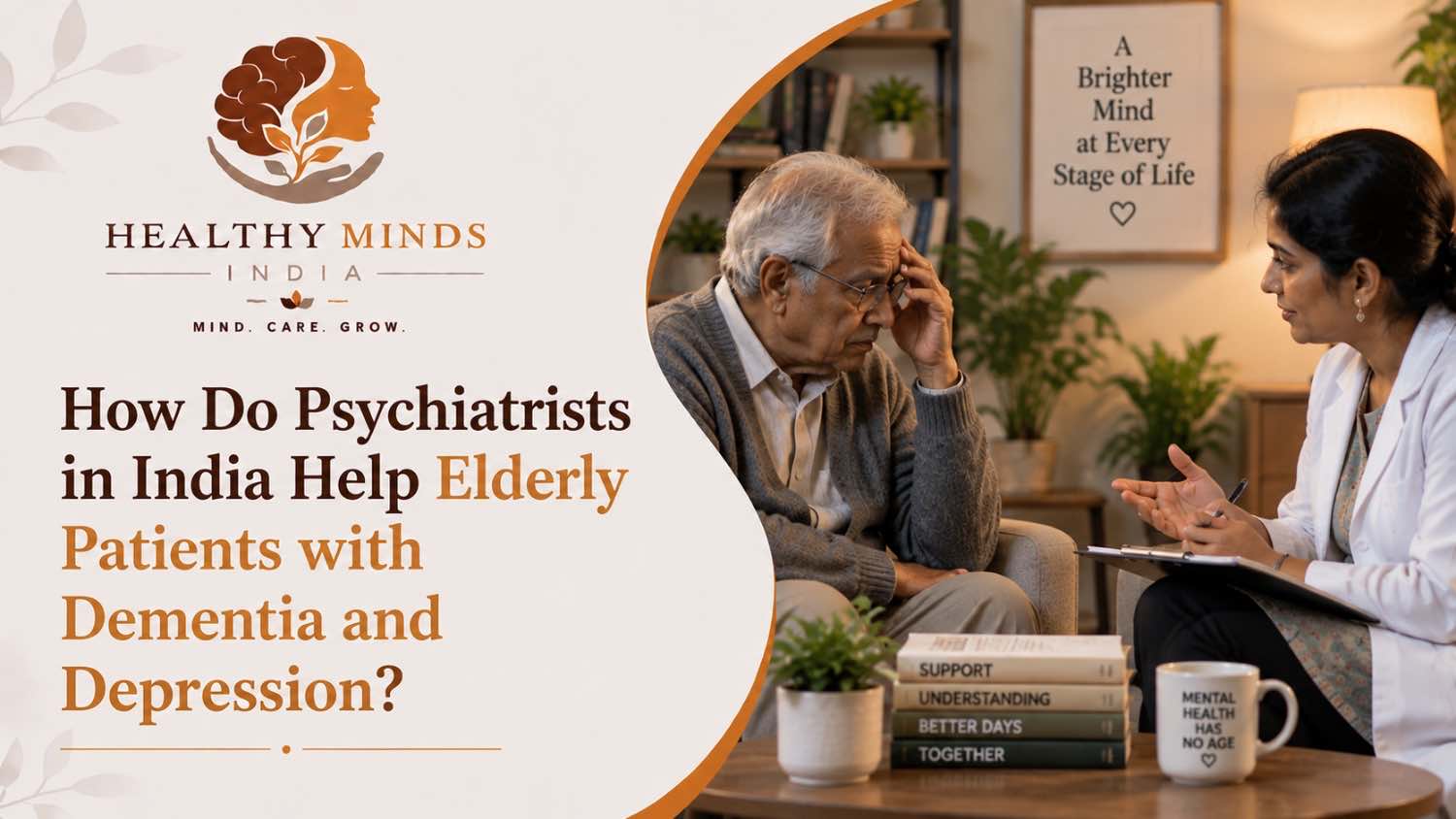
Depression and dementia-related symptoms in older adults are often dismissed as "just old age." Here is how psychiatrists in India actually help.
In this article 9
- Depression in Older Adults Looks Different
- Dementia and Its Behavioural and Psychological Symptoms
- Distinguishing Normal Aging From a Warning Sign
- Why Medication Decisions Are More Careful in Elderly Patients
- The Role of Family and Caregivers
- When to Seek an Evaluation
- What This Looks Like in Practice
- Frequently Asked Questions
- Conclusion: Not Everything Is "Just Old Age"
Late-life mental health is often dismissed as "just old age" - forgetfulness, low mood, or irritability written off as an inevitable part of getting older. Some of it is not inevitable at all, and psychiatry has specific, effective ways to help.
Here is how psychiatrists in India actually support elderly patients dealing with depression, dementia-related symptoms, and other late-life mental health concerns.
Depression in Older Adults Looks Different
Depression in elderly patients frequently does not present as obvious sadness. It often shows up as physical complaints, fatigue, loss of appetite, withdrawal from family, or a general loss of interest, which is why it is commonly missed or attributed to physical illness alone. A geriatric psychiatrist is trained to recognise this presentation and evaluate for depression specifically, rather than assuming low mood is simply age-related.
Dementia and Its Behavioural and Psychological Symptoms
Dementia itself is primarily a neurological condition, but the behavioural and psychological symptoms that accompany it - agitation, aggression, anxiety, hallucinations, sleep disturbance, and "sundowning" (worsening confusion in the evening) - fall squarely within psychiatric care. Managing these symptoms well makes a substantial difference to both the patient's distress and the family's ability to provide care at home.
Distinguishing Normal Aging From a Warning Sign
| Normal Aging | Possible Warning Sign |
|---|---|
| Occasionally forgetting a name, recalled later | Repeatedly forgetting recent conversations or events entirely |
| Taking longer to learn something new | Getting lost in familiar places or routines |
| Occasional low mood after a difficult event | Persistent low mood, withdrawal, or loss of interest lasting weeks |
| Mild irritability when tired | Sudden, significant personality or behaviour changes |
Why Medication Decisions Are More Careful in Elderly Patients
Older adults often take multiple medications for physical conditions, and metabolise drugs differently than younger adults. A geriatric psychiatrist typically starts at lower doses, watches more closely for interactions with existing medication, and weighs side effects - particularly sedation and fall risk - more carefully than in a younger patient. This is deliberate caution, not under-treatment.
The Role of Family and Caregivers
Caregiver input is often essential, since the patient may not fully recognise or report changes in their own behaviour, memory, or mood. A good geriatric evaluation actively involves family members in describing patterns at home, and treatment plans usually include practical guidance for caregivers, not just medication for the patient.
When to Seek an Evaluation
- Memory lapses that are frequent, worsening, or affecting daily functioning - not just occasional forgetfulness.
- A noticeable, sustained change in mood, motivation, or personality.
- New agitation, aggression, or confusion, particularly if it worsens in the evening.
- Withdrawal from family, friends, or previously enjoyed activities.
- Any caregiver reaching a point of exhaustion - this is itself a signal that the situation needs professional support, for both the patient and the family.
What This Looks Like in Practice
At Healthy Minds India, elderly mental health evaluations with a psychiatrist in India involve careful medication review, caregiver guidance, and coordination with other physical health care the patient is receiving. If cost is a factor in this decision, this guide to psychiatrist consultation costs in India covers what to expect.
Frequently Asked Questions
-
Is forgetfulness in old age always a sign of dementia?
No. Occasional forgetfulness is common with aging; frequent, worsening memory loss that affects daily functioning is what warrants evaluation.
-
Can dementia-related agitation be treated?
Yes, behavioural and psychological symptoms of dementia can often be significantly reduced with the right combination of non-drug strategies and, when needed, carefully chosen medication.
-
Is depression in elderly people treatable?
Yes, and often very effectively, once correctly identified rather than dismissed as "just old age."
-
Why does my elderly parent's psychiatrist start with such a low medication dose?
Older adults metabolise medication differently and are more sensitive to side effects, so geriatric psychiatrists typically start low and adjust gradually.
-
Should I bring my parent's full medication list to the appointment?
Yes, this is important, since interactions with existing medication are a key consideration in elderly psychiatric care.
-
What if my parent refuses to see a psychiatrist?
This is common. Framing the visit around a specific symptom, such as sleep or memory, rather than "mental health," and involving a trusted family member, often helps.
Conclusion: Not Everything Is "Just Old Age"
Depression, dementia-related behavioural symptoms, and other late-life mental health concerns are genuinely treatable, not an inevitable part of aging to simply be endured. A geriatric-aware psychiatric evaluation, involving the family, is often the difference between a difficult few years and meaningfully better quality of life.
Medically reviewed by Dr. Saurabh Kumar, Consultant Neuropsychiatrist, Healthy Minds India, Patna. This article is for general education and is not a substitute for a personal consultation. To discuss your situation, book an appointment or contact the clinic.
Disclaimer: all characters and events depicted in this blog are entirely fictional. Any resemblance to actual persons, living or dead, is purely coincidental. The content is intended for informational purposes only and should not be considered medical advice. Always consult a qualified healthcare professional for medical concerns.